
Louis Vuitton x Singer Porsche 911: Inside Both One-Off Cars
One is a road-trip coupe in archival saffron. The other is a Riviera yacht wearing a windshield. Both came from the same two houses, and neither one is a compromise between them.
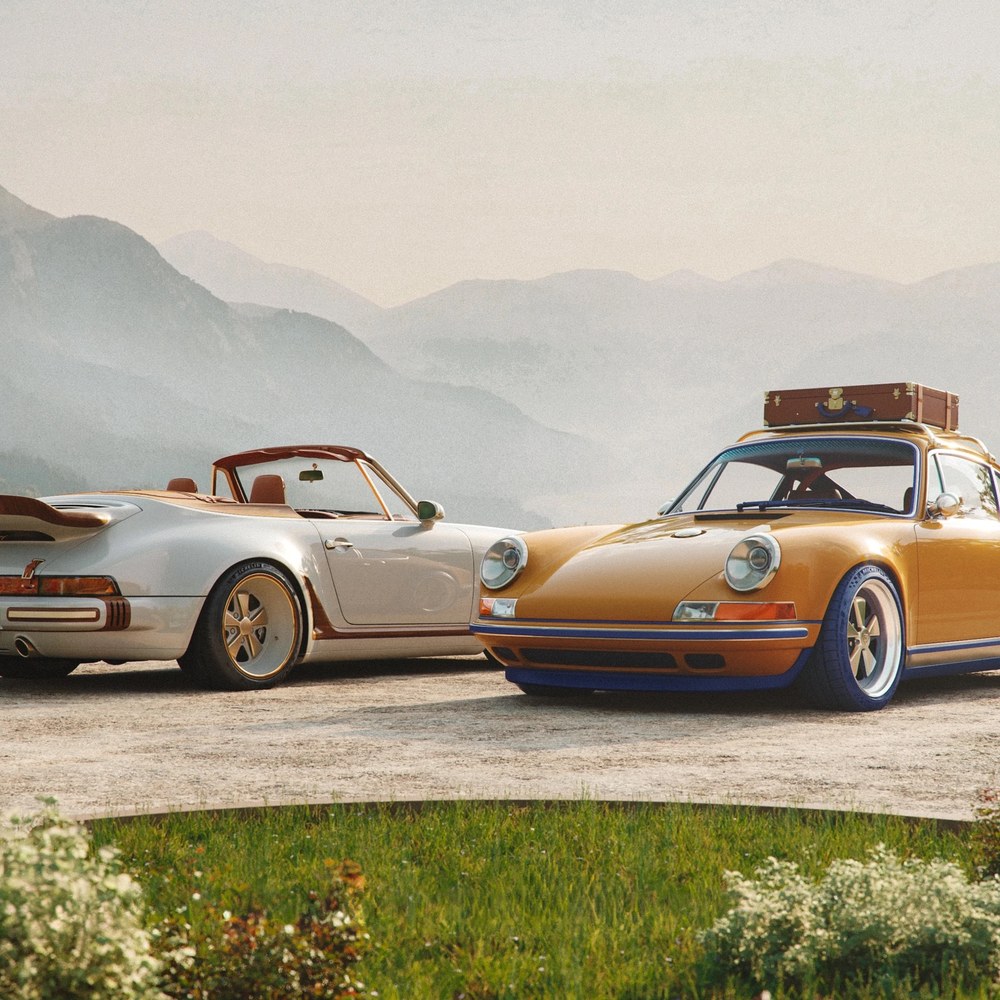
Singer Vehicle Design and Louis Vuitton unveiled two one-off Porsche 911 restomods at Monterey Car Week in August 2026, and the easy read is that a fashion house put its name on a very expensive car. The actual project is stranger and more disciplined than that: a single design language pushed through silhouette, color, instruments, luggage, and clothing, on two cars that don't even agree with each other about what a Porsche restomod is for.
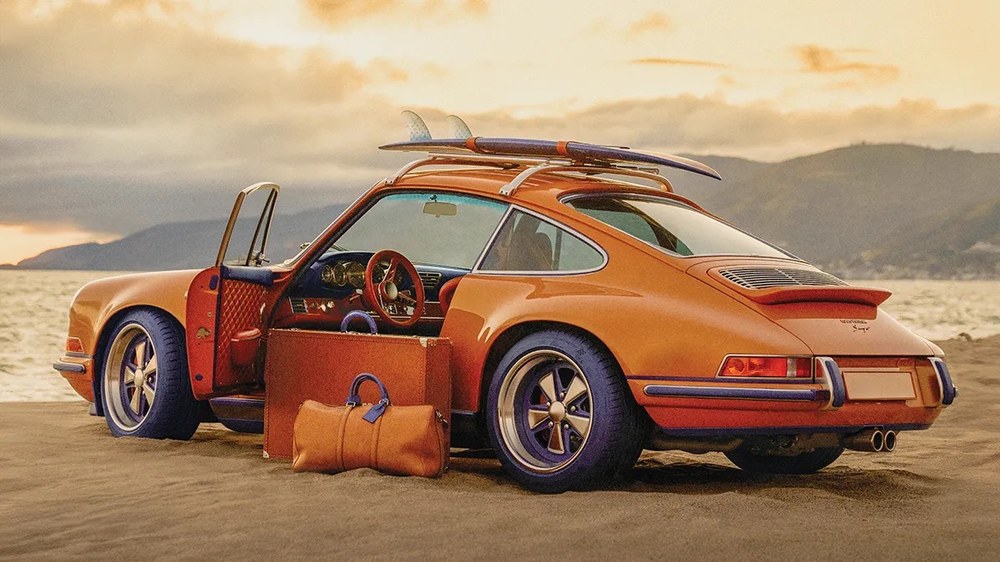
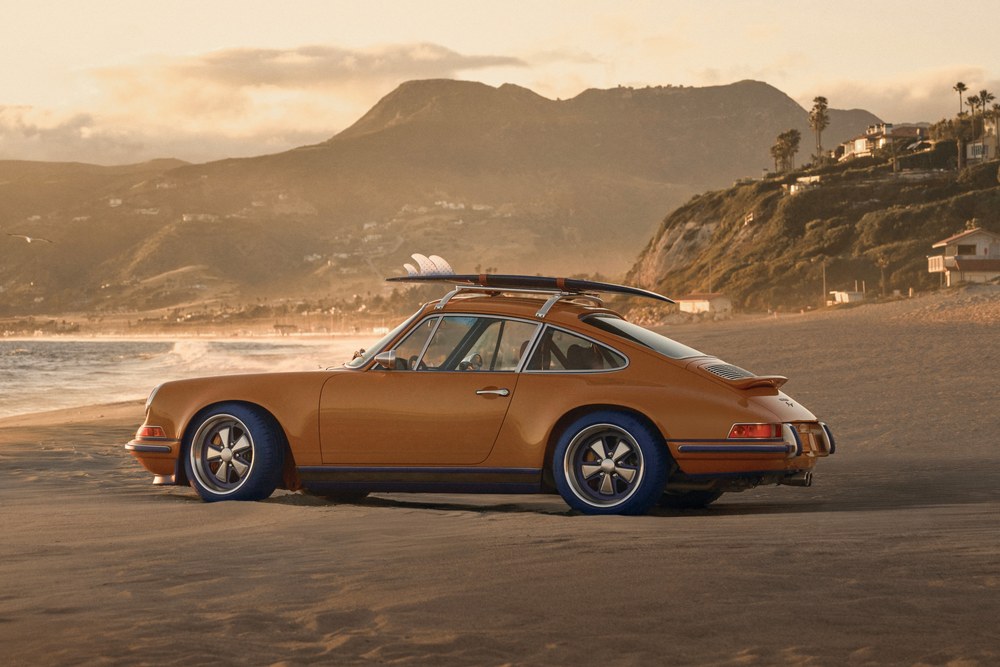
The first car, the 911 Reimagined by Singer — Classic, is the more straightforward brief: a grand-touring coupe built around Singer's usual foundation, a 964-generation 911 carrying a 4.0-liter naturally aspirated air-cooled flat-six, a six-speed manual, and carbon-ceramic brakes. Louis Vuitton's treatment is archival rather than decorative — saffron body paint against cobalt-blue and yellow graphics, a natural-leather cabin with yellow stitching, trunk-inspired diamond embossing on the seats, and a roof rack engineered to carry an actual bespoke trunk, a set of skis, or a surfboard. It reads as a road-trip car because every material choice on it argues for one.
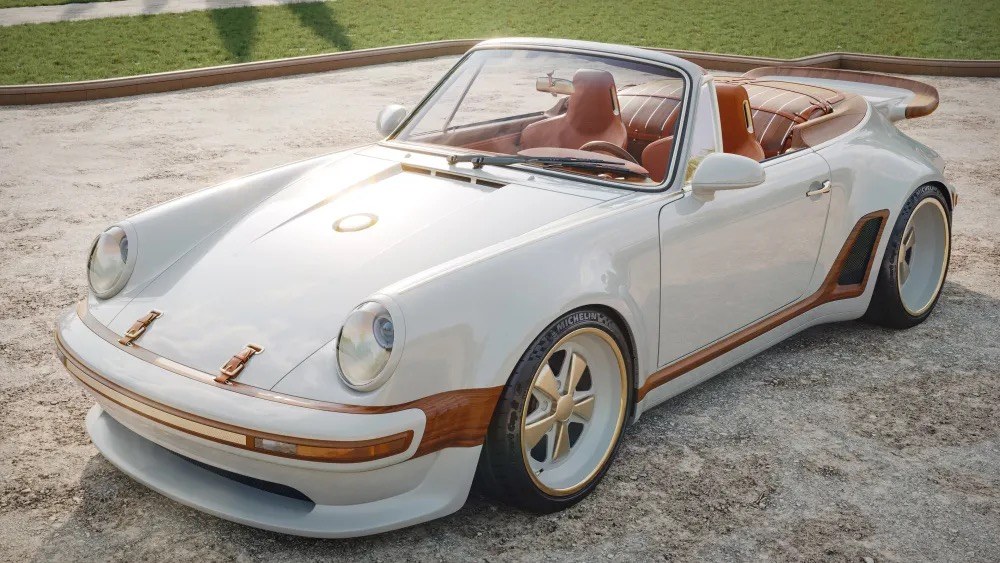
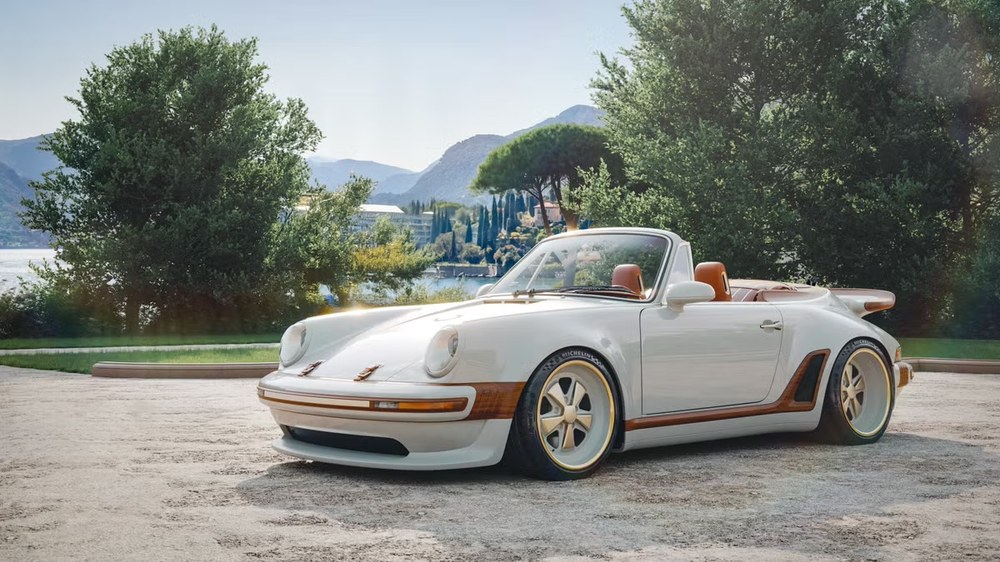
The second car makes a completely different argument. The 911 Reimagined by Singer — Classic Turbo is an open-top cabriolet, reportedly running a 3.8-liter twin-turbo flat-six at 510 horsepower, and it was conceived directly by Nicolas Ghesquière, Louis Vuitton's artistic director of women's collections. Finished in Calcaire Lutétien white with precious-wood trim, gold-toned hardware, and nautical rear-deck detailing, it isn't styled like a driver's car so much as a Riviera motor yacht that happens to have four wheels instead of a hull.
Two cars that don't even agree with each other about what a Porsche restomod is for.
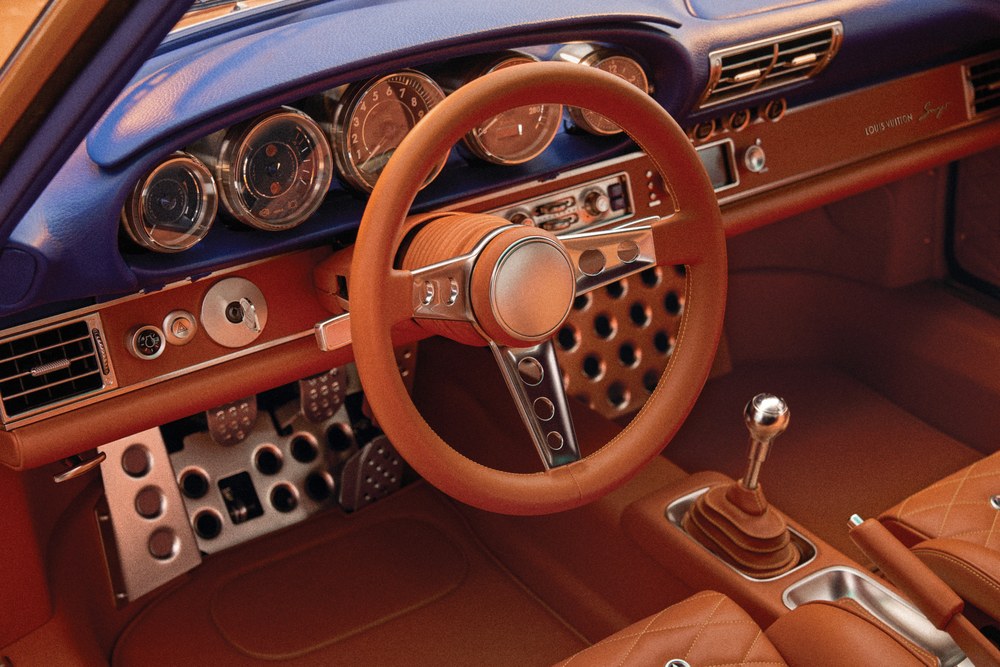
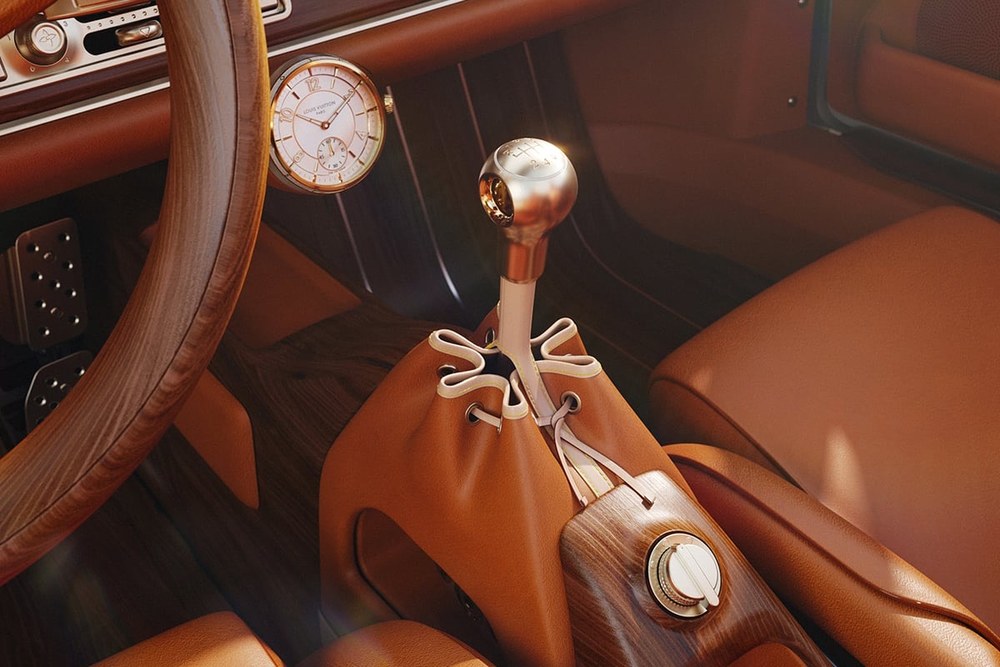
The whole project reportedly started much smaller than either finished car: a client request for a custom dashboard clock. Louis Vuitton's watchmaking atelier, La Fabrique du Temps, built a removable, mechanical, Tambour-inspired clock that converts into a desk clock when it's out of the car — and from there, the two houses spent roughly a year jointly developing the gauge and instrument design, translating Louis Vuitton's own watchmaking vocabulary directly into a Porsche cockpit rather than bolting a logo onto an existing dial.
That scope is really the story. This isn't a monogrammed Porsche — it's a coordinated luxury-travel system that extends into fitted luggage, a dedicated racing helmet, keys, roof-rack hardware, and clothing built for the specific owner of each specific car. Singer has called it the first co-branded item in Louis Vuitton's entire history, and an unprecedented collaboration on Singer's side as well. Each car ships with its own capsule of Louis Vuitton pieces built to match it — 17 for the coupe, 22 for the cabriolet — including a dedicated Tambour Automatic watch and custom-fitted trunks built to the exact dimensions of each car's cargo space.
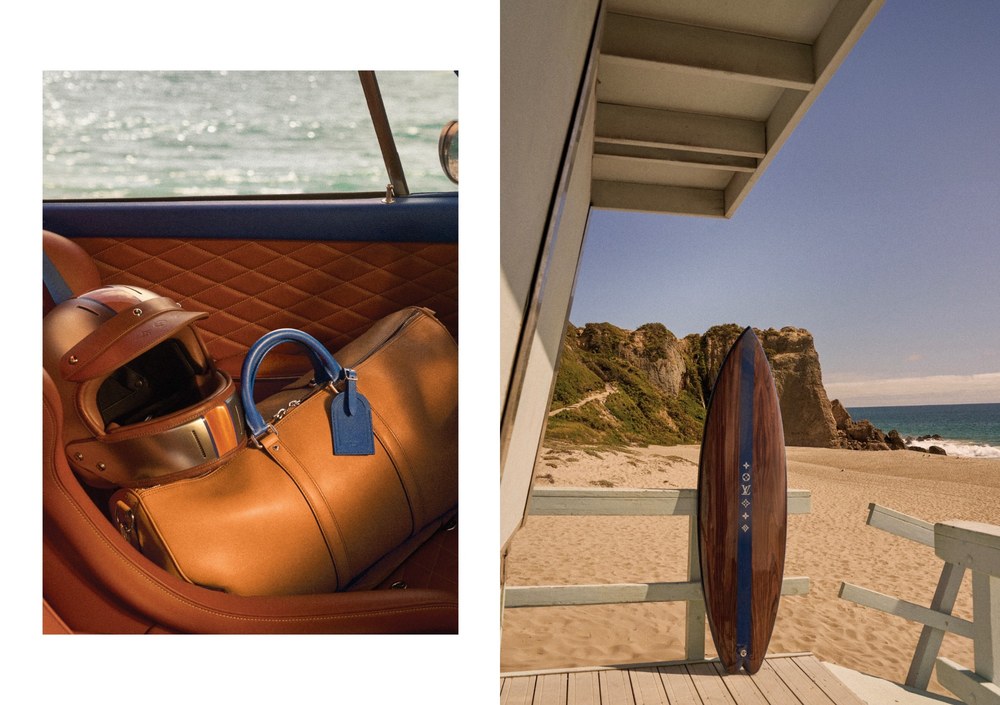
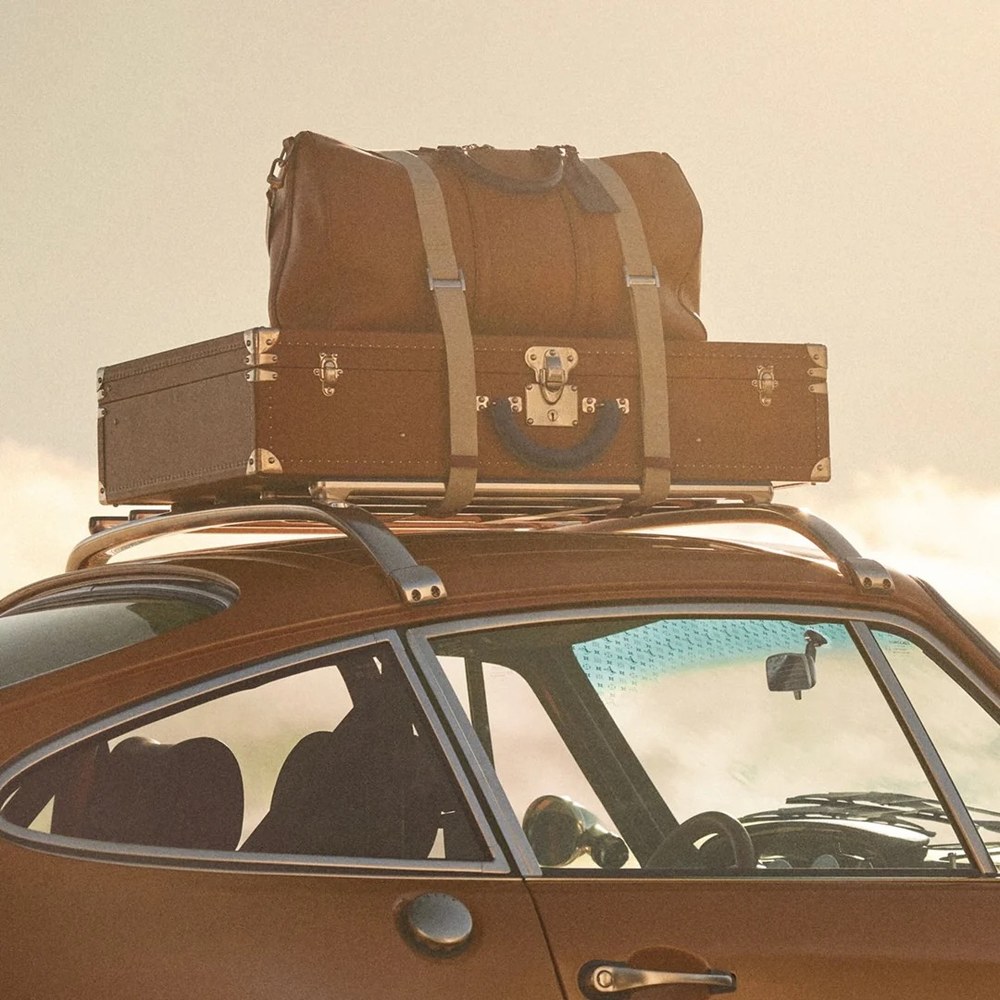
Neither company has published pricing, and these are bespoke, client-commissioned builds rather than anything orderable off a configurator — between the going rate for a Singer commission and the scope of custom Louis Vuitton work involved, a seven-figure proposition is the reasonable assumption rather than a number anyone needs to confirm.
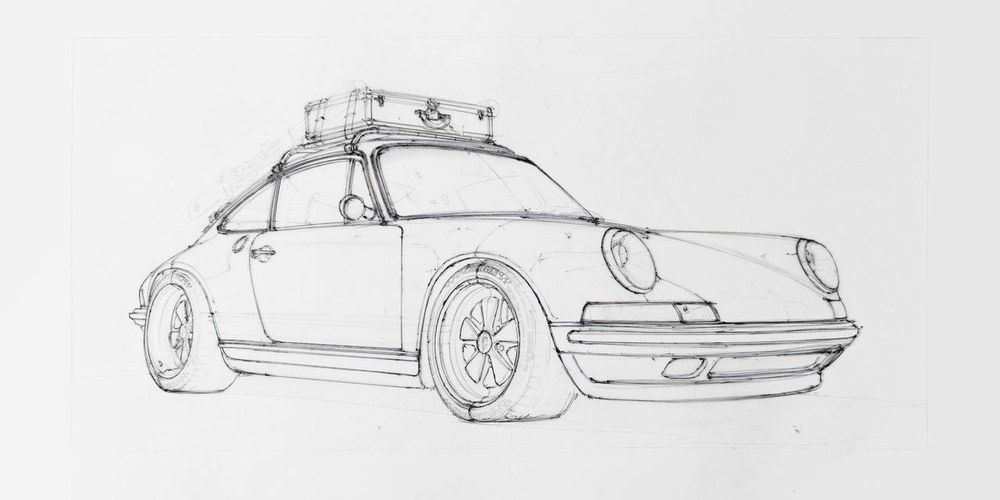
Of the two, the Classic is the more coherent piece of design thinking: archival color, travel hardware, and a clear road-trip narrative all pulling in the same direction. The Turbo Cabriolet is more editorial than practical — a 911 reimagined as a yacht is a harder brief to fully resolve than a 911 reimagined as a road-trip car, and it reads that way. But the lesson sitting underneath both cars is the same one either way: the project never once reached for a logo as the shortcut. It carried one creative language through shape, material, instruments, and the imagined life of the owner, all the way down to what's strapped to the roof.