
Berneron Mirage Miroir: Price, Specs, What Makes It Different
No hour markers, no subdial, no separate face at all -- the bridges and mainplate are doing every job a dial usually does, in solid gold, because Berneron decided the mechanism was allowed to just be the watch.
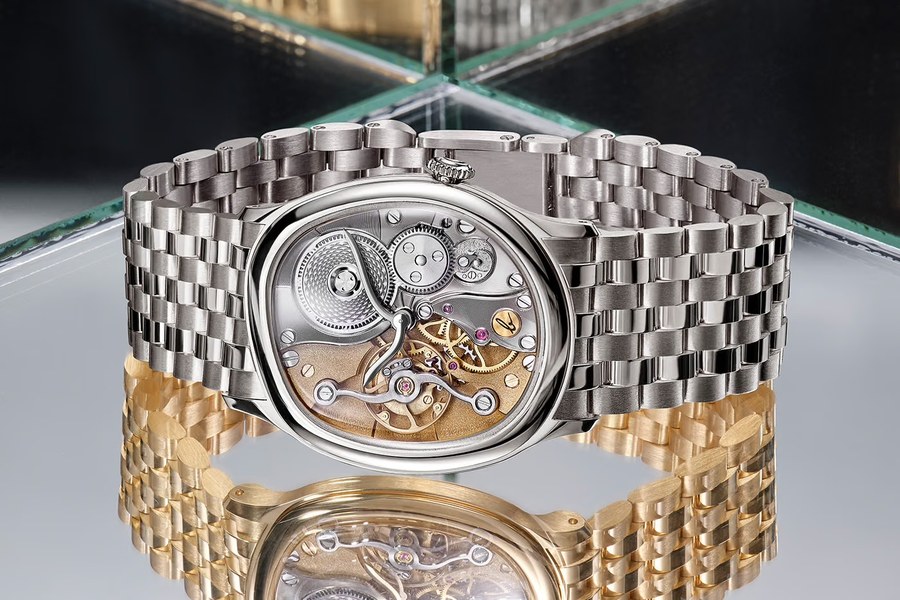
The Berneron Mirage Miroir doesn't have a dial. Not a skeletonized one, not a partially openworked one — there's no separate layer sitting over the movement at all. The bridges and mainplate of the watch's new Caliber 283 are arranged specifically so the mechanics themselves can be read as the time display, which is a genuinely different design problem than skeletonizing an existing watch and calling it done.
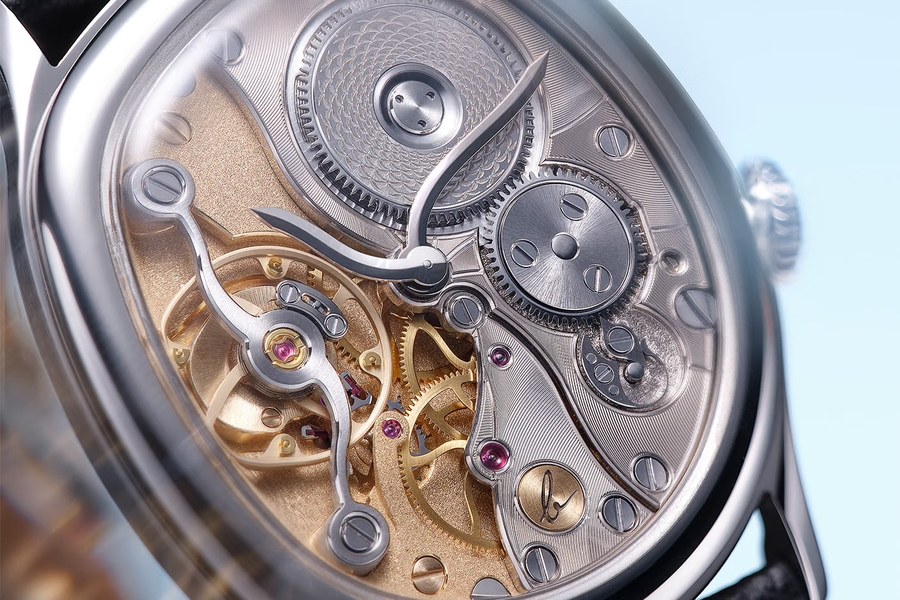
Berneron calls the approach "mirrored construction," and it's an evolution of the brand's signature asymmetric Mirage rather than a new silhouette. The bridge and mainplate architecture is composed on purpose — organized to guide the eye toward specific points the way a conventional dial's hour markers would, rather than left as an attractive tangle of gears behind glass. There's no seconds subdial anywhere on it. The rotating seconds wheel, normally a supporting component, is left exposed to do that job on its own.
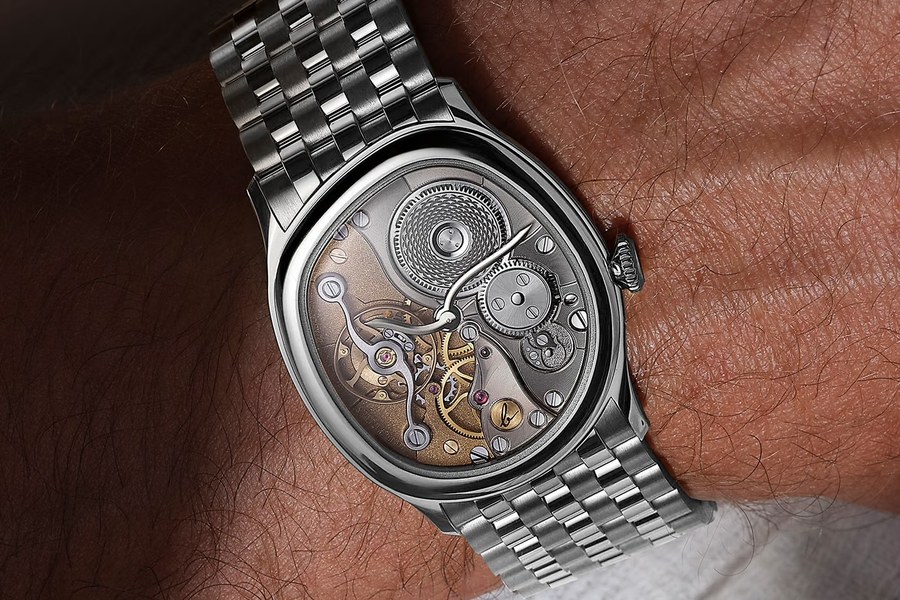
The specs underneath support the idea rather than just filling out a spec sheet. Caliber 283 — Berneron's fourth in-house movement, named for its 2.83mm thickness — runs an inverted hand set with the hour hand on top, a free-sprung balance wheel, and a 72-hour power reserve, built from 135 components and 17 jewels at 21,600 vibrations per hour. Getting a hand-wound movement that thin to also function as its own dial is a considerably harder brief than either goal on its own.
There's no dial underneath this. The bridges and mainplate are doing that job themselves.
The finishing carries the same intent. Guillochage, anglage, laser engraving, colimaçonnage, cerclage, traits tirés, nuagage — Berneron applies essentially the full traditional finishing vocabulary to a movement that's going to be looked at directly, permanently, with nothing covering it up. It's decoration built for scrutiny a hidden movement would never get.
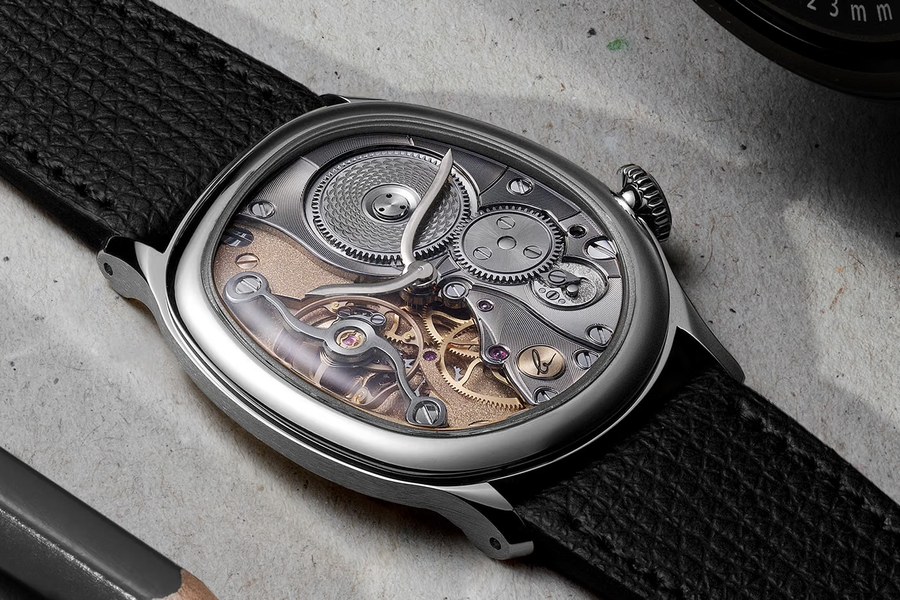
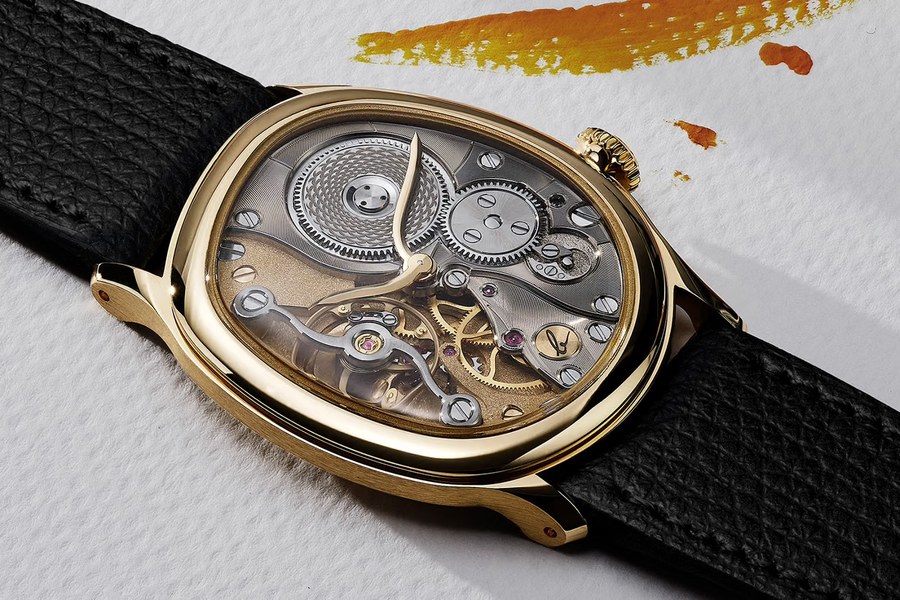
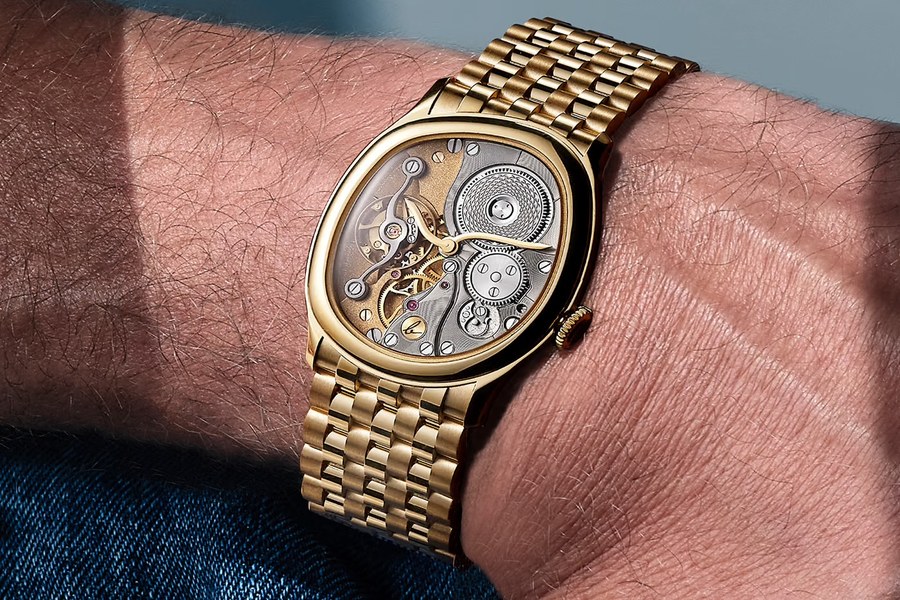
The material commitment matches the mechanical one. Case, hands, mainplate, bridges, pin buckle, even the spring bars — all 18-karat gold, in either white or yellow, inside a 38 x 34 x 7mm case that keeps the Mirage's soft, off-center asymmetry and a 42mm lug-to-lug span. It's the kind of detail that reads as excessive on a spec sheet and reads as the entire point in person: nothing on this watch is gold-plated or gold-adjacent. It's gold or it isn't there.
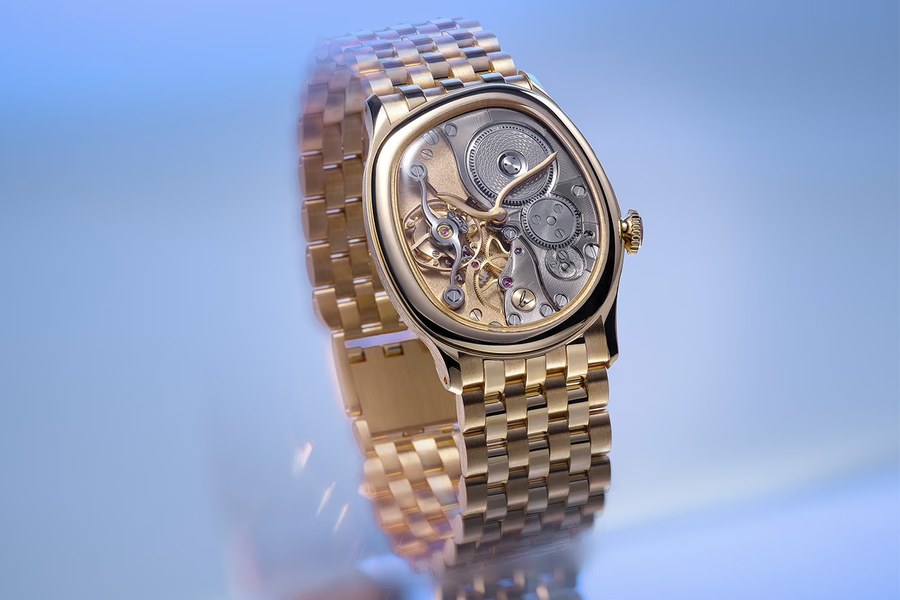
That extends to the strap question. The Barenia leather configuration, at CHF 72,500, keeps the movement as the obvious focal point. The alternative — a seven-row, fully integrated 18-karat gold bracelet with its own micro-adjustment, at CHF 130,250 — reportedly takes over 150 hours of work on its own, which makes it closer to a second complication than an accessory.
Availability runs on watchmaking's slower clock rather than a typical limited-edition drop: Series A production is planned at 36 pieces per colorway, every year, for ten years, with first deliveries not landing until October 2027. That's a running production line dressed up as scarcity, and also genuinely as scarce as most actual limited editions manage to be.
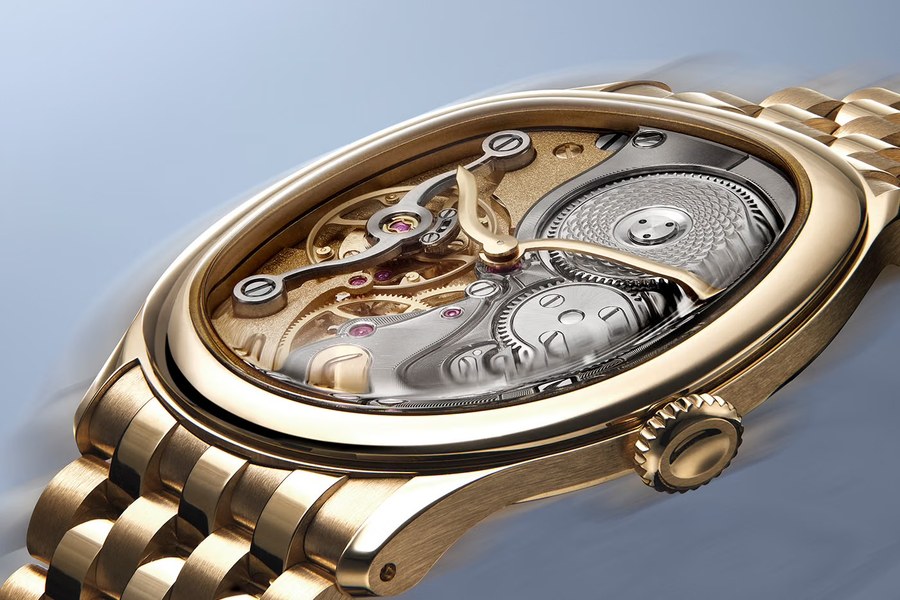
White gold reads sharper here, closer to industrial jewelry than watchmaking. Yellow gold reads warmer and more archival, more willing to show its own hand-finishing. Either way, the asymmetry that's defined every Mirage watch so far stops being a styling decision on the Miroir and becomes something closer to a byproduct — the shape the movement generated for itself once it was finally allowed to be the whole watch.