Why Mickey Pearson Wins: Reading The Gentlemen Through Pierre Bourdieu
Guy Ritchie's title is a joke with a straight face. Nobody in The Gentlemen is measured by whether they're good — only by whether they've learned to look like they belong at the top of the room.
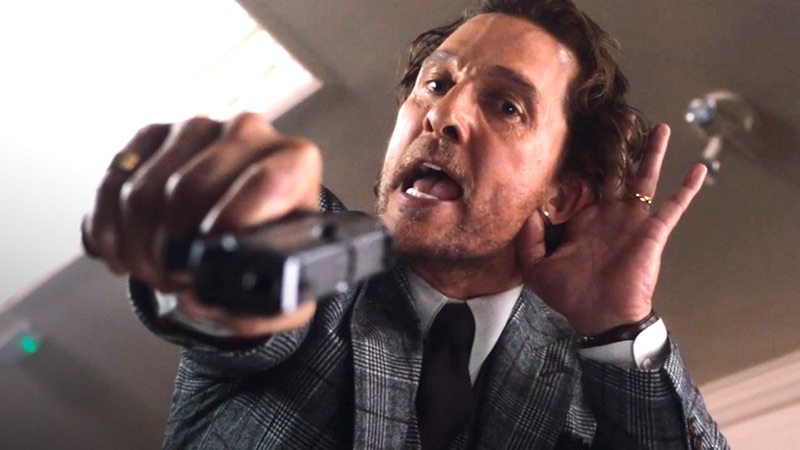
The title of The Gentlemen is doing more work than it lets on. Nobody in Guy Ritchie's film earns that word through decency. They earn it — or fail to — through composure, tailoring, timing, and the ability to make violence look like the last resort of a reasonable man instead of the whole plan. It's a two-hour argument for a very specific idea: that power is a performance most people never learn the choreography for, and the sociologist Pierre Bourdieu spent a career explaining exactly why.
Bourdieu's terms map onto this film almost too cleanly. Habitus is the instinct a person carries into a room — taste, posture, the unconscious sense of what's appropriate here. Capital is what they actually have to spend: money, yes, but also reputation, relationships, information. Field is the arena those instincts and assets get spent in, and The Gentlemen's field is a genuinely strange one — British organized crime stitched together with land-rich, cash-poor aristocracy, all of it running on rules nobody states out loud.

Mickey Pearson is the film's proof of concept. He's an American outsider with no hereditary claim to any of it, and he wins anyway, because he didn't just accumulate money — he built a habitus to match the field he wanted to dominate. Tailoring instead of tracksuits. Private meetings instead of street corners. Calibrated menace instead of loud threats. He understood something Ritchie keeps returning to: in this particular field, raw violence is low-status. The real flex is making people comply while looking untouchable doing it.
Raw violence is low-status here. The real flex is making people comply while looking untouchable doing it.
That's also why Mickey's exit plan matters beyond the money. Selling the business isn't just a payday — it's an attempt to convert criminal wealth into something more permanent: a recognized, secured position, the kind old money gets handed at birth and Mickey has spent years earning the hard way.
Dry Eye is the film's clearest counter-argument, and the contrast is really a contrast in habitus, not talent. He has ambition and capital of his own. What he doesn't have is Mickey's patience for the field's unwritten choreography — he wants the crown declared, not quietly assumed.
Two versions of new money
| Mickey Pearson | Dry Eye | |
|---|---|---|
| Relationship to power | Makes it look effortless, already settled | Needs it seen and acknowledged |
| Style | Restrained, tailored, patient | Provocative, immediate, performative |
| Use of force | Calibrated, delegated, a last resort | Open intimidation, a first move |
| What he's chasing | A permanent, recognized position | The crown, publicly declared |
It would be tidy to call this a simple contrast between class and no class, but that's the trap Bourdieu specifically warns against — it isn't that Mickey has better taste in some absolute sense. It's that his particular style matches what this field already rewards: understatement, discretion, force translated into quiet consequence instead of spectacle. Dry Eye's style gets read as vulgar not because it's objectively worse, but because it exposes the scramble for status that Mickey's polish is built to hide.
Even the film's landed aristocrats make the same point from the opposite direction. They still carry the old symbolic weight — the name, the estate, the bearing that says they belong at the top. What they've lost is the cash to keep any of it running, which is exactly the gap Mickey exploits, trading money for the use of a prestige he could never inherit but can, for the right price, rent.
Strip the tailoring and the one-liners away and The Gentlemen is making a fairly serious argument about how power actually gets distributed: not to whoever has the most money, and not to whoever is willing to go furthest, but to whoever has learned to make their particular mix of money, violence, and charm look like it was always supposed to be there. Mickey wins because nobody in the room can tell where his performance ends and his authority begins. That, the film keeps insisting, is the whole trick.