
The Balvenie Waited 88 Years. Daniel Arsham Built the Proof.
Cask #239 was filled in 1931 and opened in 2019. Nobody currently on staff at the distillery was alive for either date. Seventeen decanters is what that patience becomes.
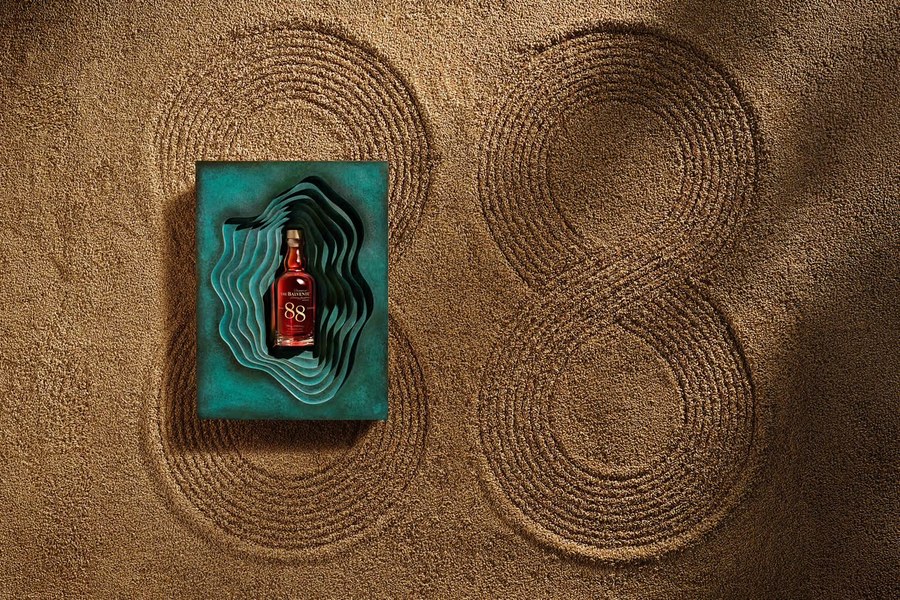
Cask #239 was filled at The Balvenie's Speyside distillery in 1931. It was opened in 2019, eighty-eight years later, by Malt Master Kelsey McKechnie. Nobody currently working at the distillery was alive for either date. What came out was enough for seventeen decanters, and the whole story of what that kind of patience is actually worth.
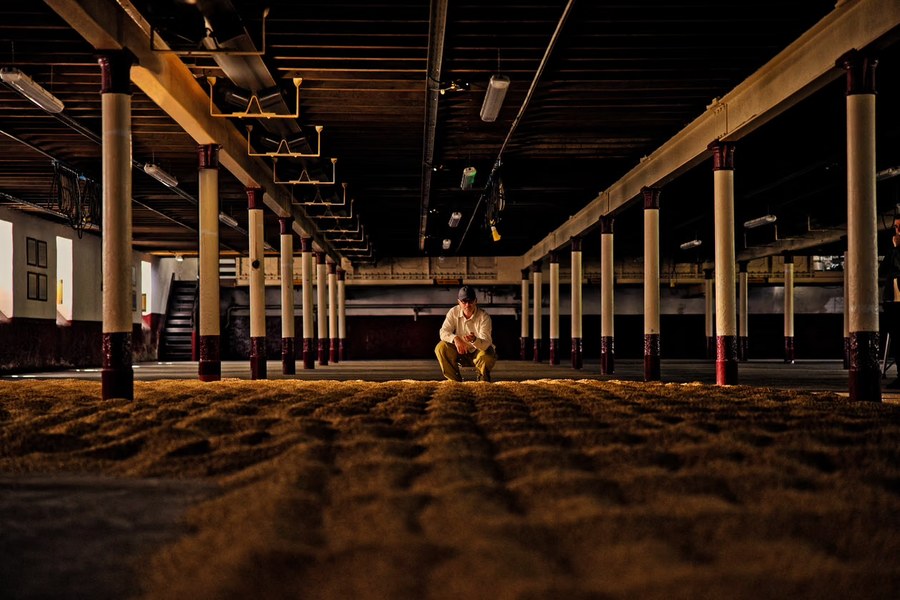
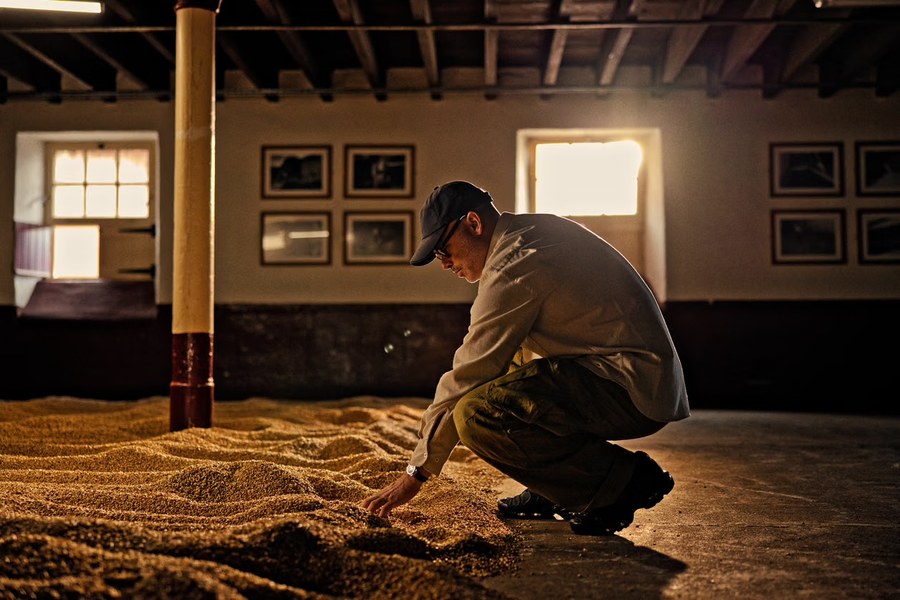
The Balvenie built its new 1931 Collection around that cask, and rather than launch it like a product, the label handed the debut to Daniel Arsham as a live installation at Frieze Seoul. "Dawn Of Our Spirit" puts four dancers inside a circular bed of loose barley at S50 in Seongsu, their choreography — by Sukyung Yoo — echoing the slow, repetitive labor of turning grain on a malting floor by hand. A soundscape recorded inside the actual Speyside distillery plays underneath it, so the room doesn't read as a gallery so much as an abstracted version of the working floor eighty-eight years removed.
Arsham traces the project back to his first trip to Speyside. "One of the things that struck me was the handmade quality of everything. It's technical, but very craft in a way, so I pulled out a lot of materials I saw," he said, sitting across from a table of early, discarded mockups. "In the end, the preciousness of that liquid really needs to be considered."
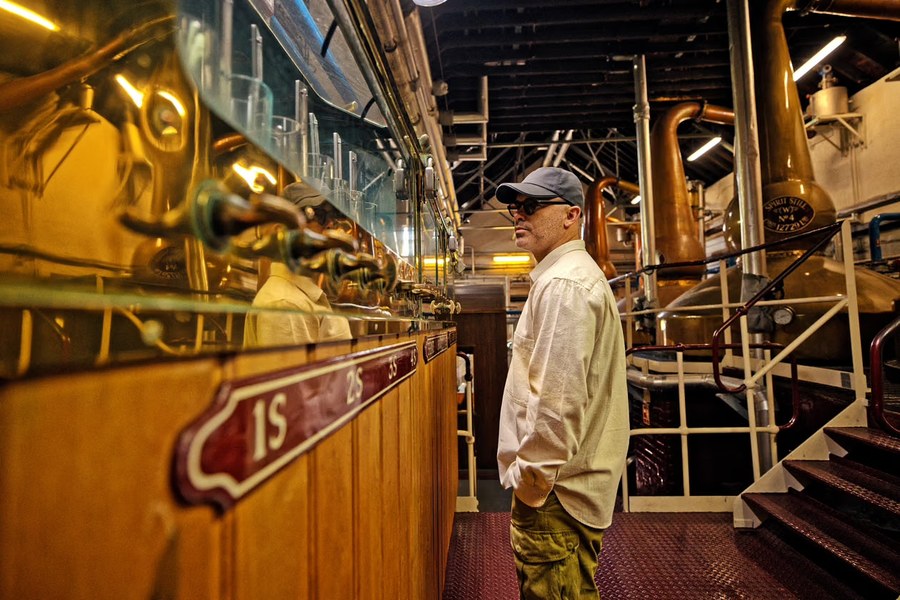
That consideration shows up as an object built almost entirely out of metaphor. The whisky itself sits in a hand-blown crystal decanter detailed with 18-karat gold, its neck shaped after the "Balvenie Ball" — the distillery's distinctively shaped still, and the source of the whisky's honeyed character. Arsham's housing around it splits into three materials, each standing in for a stage of the maturation: eight hand-patinated bronze layers on the front, one for each decade the cask spent waiting; a copper disc at the center, cast from a retired still; and eighty-eight thin layers of oak across the back, one per year, referencing the European sherry butt the spirit first went into.
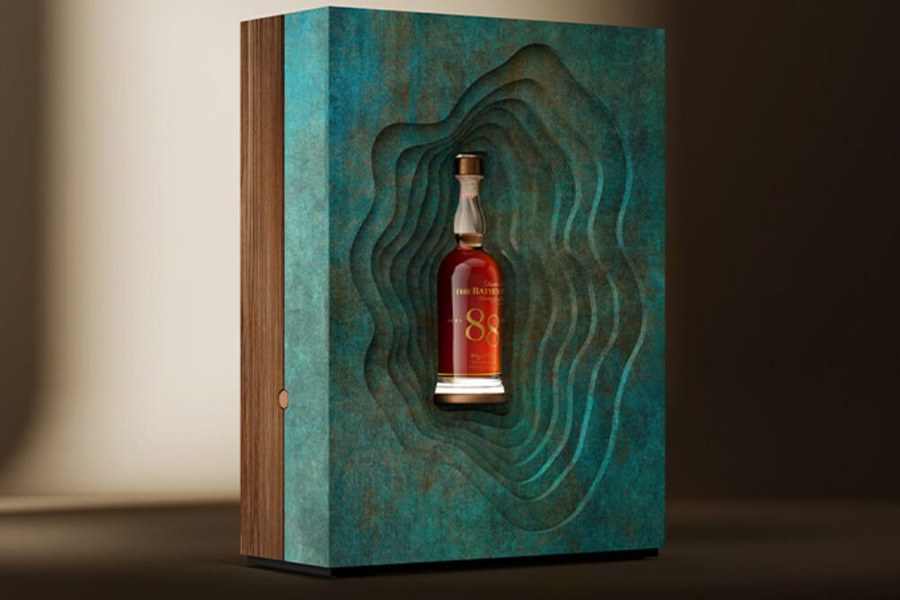
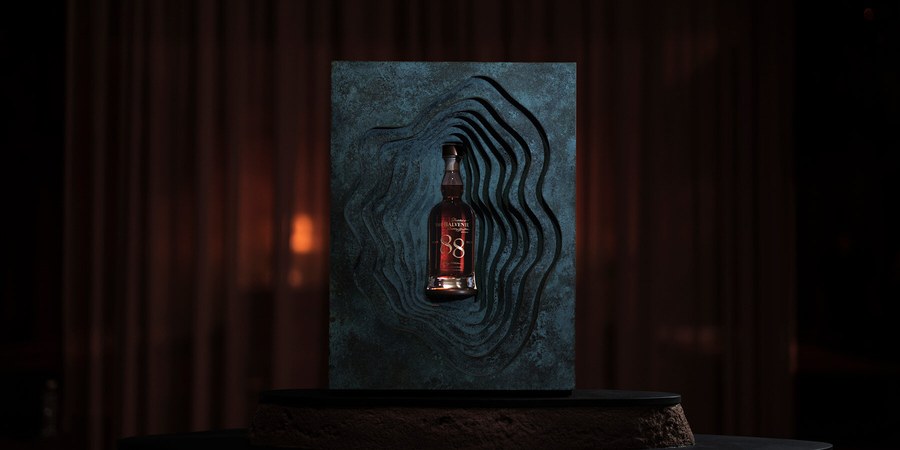
It's the whisky when it's moving through time. It's moving through the copper, into the wood, and then into your glass.||Daniel Arsham||
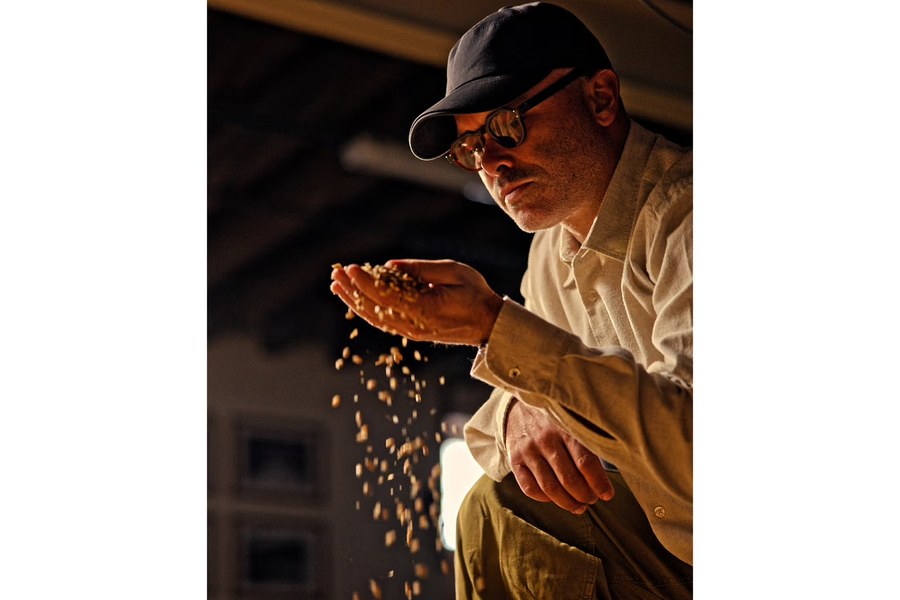
1931 wasn't only the year the cask was filled. It's also the year The Balvenie opened its Home Malt Floor, which the distillery still operates today — one of a handful in Scotland stubborn enough to keep hand-turning barley in an industry that automated the process decades ago. The performance isn't really staging something symbolic; it's staging the one part of the process that hasn't changed since the cask it's honoring was filled.
After the barley settles, the experience moves into a gallery holding Arsham's sculpture alongside guided tastings led by McKechnie herself. "It's still a very handmade process," Arsham said of the decision to build an entire performance around it. "Sometimes we lose a little bit of that seeing it just on a shelf or having it at home. We tried together to bring some of that into the experience and tell that story."
The fit makes sense once you know Arsham's broader practice. He calls it "fictional archaeology" — treating ordinary, often industrial objects as artifacts recovered from some future excavation, carrying centuries of imagined wear. A whisky that spent eighty-eight years becoming what it is barely needed the fiction.
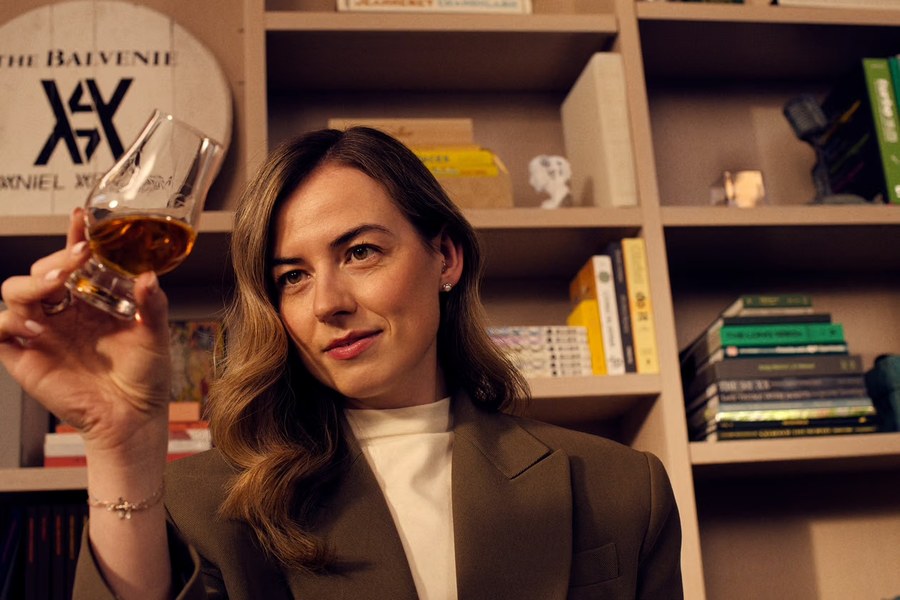
"In whisky, nothing happens overnight," McKechnie said. "The fruits of today's craftspeople might not be tasted for generations. Being able to release an 88-year-old really reaffirms this to everyone at the distillery — that all the hard work we're putting in today is a real testament to persistence and patience. That's something I think Daniel understands beautifully."
The 88-year-old is now the oldest whisky ever released, a record The Balvenie doesn't seem interested in treating quietly. "At The Balvenie, we are always in charge of our own destiny," McKechnie said. "I love the thought of us doing something that changes the landscape of Scotch whisky. We've done it before. I relish the opportunity to do it again."

"Dawn Of Our Spirit" continues on to New York, Shanghai, and Taipei after Seoul. Seventeen decanters will outlast the tour, the distillery, and most of the people who see the performance — which was more or less the point of filling the cask in 1931 in the first place.