Karma Automotive's Best-Kept Secret Isn't the Car. It's Who's Running It.
There are three Black executives currently running an American car company. One of them would rather talk about torque than the milestone.
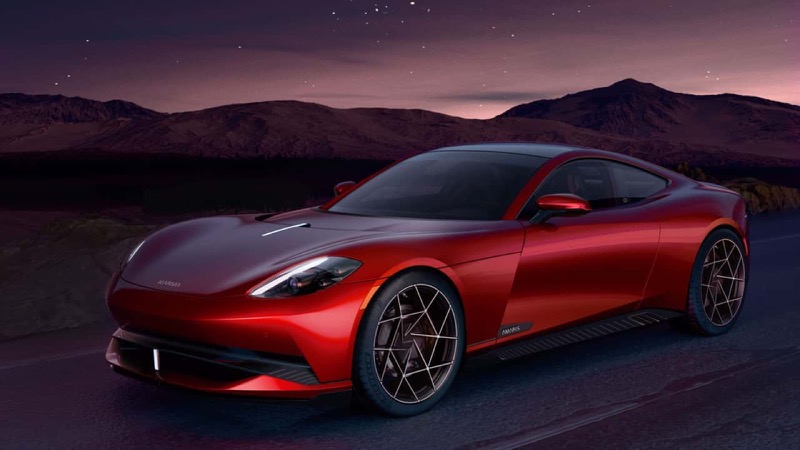
Karma Automotive builds cars that most valet attendants will misidentify on sight, and the company has made its peace with that. It isn't chasing the three-pointed star or the prancing animal — the badges that do half the talking before a driver ever gets out. It's betting that a smaller, more particular kind of recognition is worth more.
The ownership behind that bet is not a particularly romantic story: Karma exists today because Wanxiang, a Chinese industrial conglomerate, bought what was left of Fisker's bankrupt estate in 2014 and rebuilt it in Southern California. That's a matter of public record, not a marketing line. The more interesting story is who Wanxiang put in charge of making the bet actually pay off.
In April 2023, that job went to Marques McCammon — a mechanical engineer out of North Carolina A&T who did his graduate work at Michigan, cut his teeth on the Dodge Neon SRT-4 and the Saleen S302, ran Ricardo's automotive and industrial business across North America, and spent a stretch at Intel's Wind River division deciding how software would run the next decade of cars. He is also, by most counts, one of three Black executives currently running an American automobile manufacturer — a fact he mentions far less often than his résumé would let him.
Nobody else does it the way we do.
McCammon's actual pitch has nothing to do with any of that. He has positioned Karma deliberately above the electric-car conversation everyone else is having — not chasing Tesla's volume, Rivian's utility, or Lucid's range numbers, but building toward a $200,000-to-$500,000 segment where the car is closer to bespoke tailoring than to a commodity with a battery in it. The architecture underneath is software-defined on purpose: a car built to be reconfigured around one owner instead of manufactured toward the average of all of them.
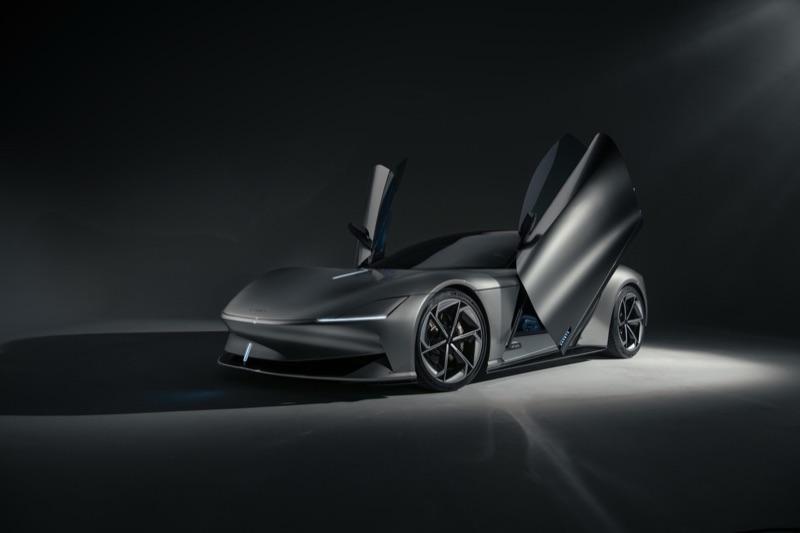
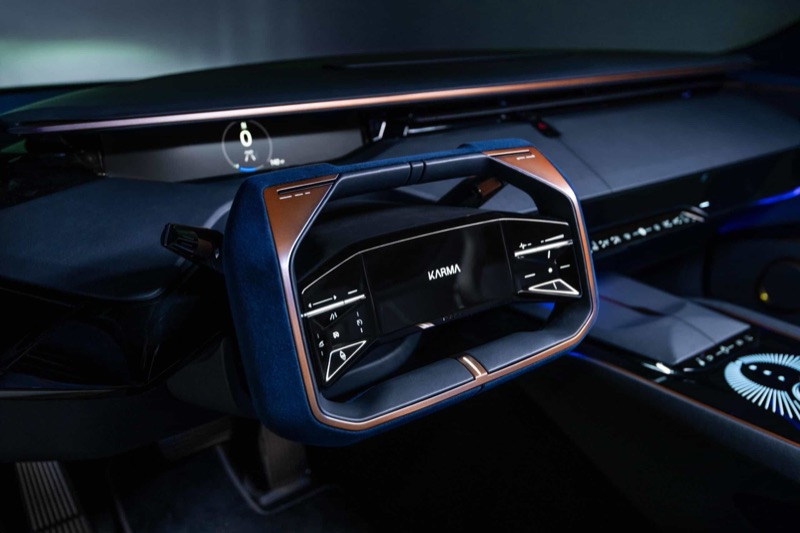
You can see the instinct most clearly in the Kaveya, the electric super-coupe currently doing the concept-car circuit — dihedral doors that open like an idea unfolding rather than a wing announcing itself, a superellipse steering yoke that trades the obvious race-car reference for something odder and more considered. It's the kind of design that photographs as confidence rather than aggression, which is precisely the read Karma is after.
But the Kaveya is a preview. The car actually on Karma showroom floors today — the one a man could put a deposit on this week — is the Revero GT, the extended-range sedan that has anchored the brand since the Fisker days and been quietly rebuilt around it twice since. It isn't a paper spec sheet. It's a car road testers have driven and, by their own account, wanted to keep.
KARMA REVERO GT
Powertrain
1.5L 3-Cyl. Range Extender + Electric Drive
Combined Output
536 HP / 550 LB-FT
Battery
28 kWh
Electric Range
80 MI
Total Range
360 MI
0-60 MPH
4.5 SEC
Top Speed
125 MPH
Kerb Weight
5,062 LBS
Length
199.4 IN
Starting Price
$124,099
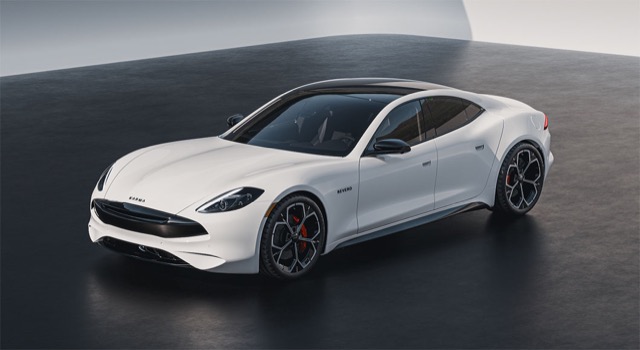
Karma Revero GT
Find Out MoreNone of that changes the fundamental math of the badge nobody recognizes. Karma is still not competing for the buyer who wants applause at the valet stand — it's competing for the one who's already had that applause, decided it wasn't the point, and started looking for a car that agrees with him instead of performing for the room. What's changed is who's making that bet pay off, and the fact that his name is about as unfamiliar to most car buyers as the badge itself.
Designing Objects That Do Not Need to Explain Themselves — Karma Automotive
That, in the end, might be the more honest version of the company's whole argument. Karma isn't selling a badge that does the explaining for you, and it isn't being run by someone who needs credit to do the work. It's betting that the right car — and, it turns out, the right man building it — would rather let the details do the convincing.